

Alison Roman On Showing Restraint, Connecting IRL, and Decluttering Cookbooks
Plus the titles she wants next to hers on the shelf

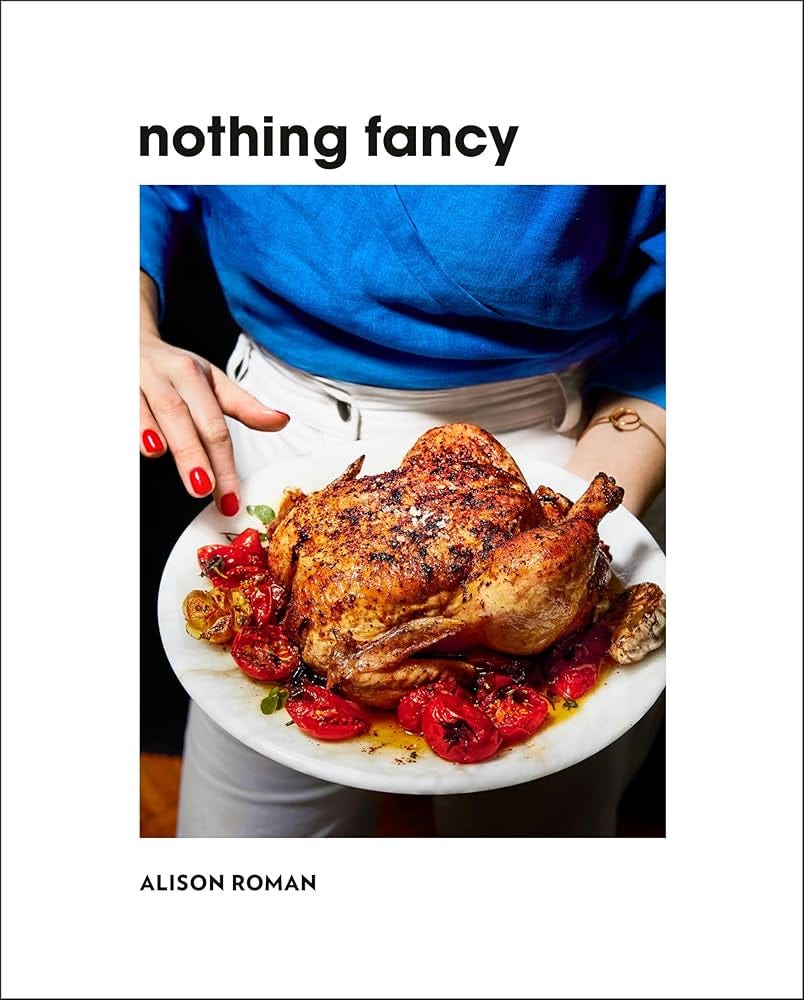
I am a food person and a product of my time, so obviously I have cooked many of Alison Roman’s recipes, including #ThePasta and #TheCookies1 (although never #TheStew, for no particular reason). Before that, I looked for her byline in Bon Appetit, feeling confident that any recipe with her name on it would be so full of flavor, it would be next to impossible not to enjoy. I also own Nothing Fancy (Bookshop/Amazon) and have paged through it many a time for dinner party inspiration.
But I’ve never locked into Roman’s work quite so completely as I have with Something from Nothing (Bookshop/Amazon), which publishes on November 11. Cookbooks take years to come to fruition, but there’s something about this one that feels exactly right, right now.

Something from Nothing is a book that calls on pantry ingredients to form the backbone of the recipes, an act that feels especially relevant these days when grocery bills are inching upwards.
This book is also secretly, stealthily (dare I say it?) a “quick and easy” book. I don’t mean that these are all 30-minute meals (although many of them are), but that they are decidedly unfussy. Most of the ingredient lists are short and undemanding. The squeeze of lemon in the soup2 I made the other night was optional. I have found no technique in the book that feels daunting in any way.
In the introduction Roman calls the book “mature,” which also feels timely. She writes:
I feel both proud and nervous to admit that this book could potentially be described as…adult. Mature, even. There’s a quiet confidence in recipes that have so little ingredients, take so little time, and yet promise so much. What the recipes here lack in bells and whistles, they make up for in soul and unimpeachable deliciousness.
It feels like a grown-up book for grown-up times.
Finally, and perhaps relatedly, it’s a vibe shift. If I wasn’t quite cool enough to ever be invited to the parties in Nothing Fancy, I think I would be welcome for dinner in the world of Something from Nothing (Bookshop/Amazon). In our interview below, Roman says the book is like “a big cozy sweater,” and that’s exactly right. It feels warmer and less showy. It’s a book to cook with and curl up with. It is being published at the ideal time of year.
For better or worse, Roman’s career has been thoroughly entangled with the internet. But it turns out that what she really loves is making physical cookbooks and talking to people about them—preferably in person. In our interview, she touches on how cooking is the antithesis of the internet, how cooks are like musicians, and the type of cookbook cover she wants (someday). I hope you enjoy our conversation.
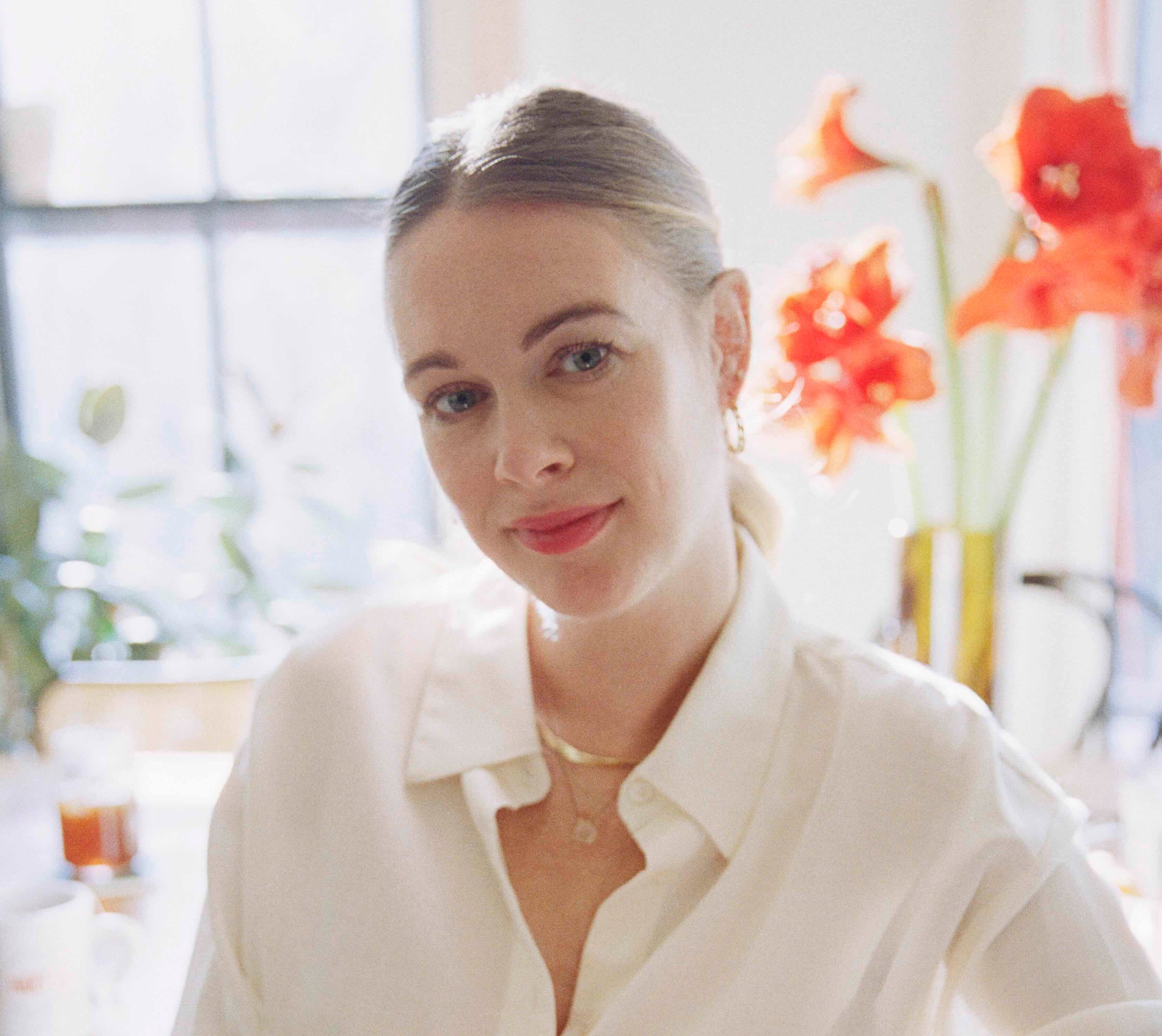
The Cookbookery Q&A with Alison Roman
About how many cookbooks do you own?
AR: I moved last year, so I went through a great purge. I probably have like 50.
I’m impressed that you could whittle them down that far!
AR: I don’t have the space for a lot of them, and if I don’t use them, if I haven’t looked at them, I’ve got to set them free. I’ve got to give them a better home than I would give them.
So what is your criteria for keeping a book? One you actually cook out of or use for inspiration?
AR: Honestly, I’ve never really cooked out of cookbooks, the exception being some baking books that I had when I was getting a start. The books I keep around tend to be the ones that I feel inspire me either spiritually or sort of vibe-wise. Like if there was a grouping of books that I’d want my books to sit with.
What are a few of the books you’d want yours to sit with?
AR: I have a lot of Diana Henry; I have a lot of Alice Waters. Brooks Headley’s Fancy Desserts I think is a great book. It’s not my style of food, but I think his writing style is so deeply personal, and I really appreciate that. And I feel like even if our tone is not the same and the recipes are very different, one could still be like, oh, these are two authors that are very much themselves. And I feel like that’s important.

Recently on a podcast you said that you feel like cooking is the antithesis of the internet. How do you mean?
AR: The internet is so fast paced, so instantaneous. It’s instant gratification. We move through it and past it at such a rapid clip and it’s sort of ephemeral. But cooking is rooted in such reality. If I were a ceramicist, I would feel the same way about making ceramics. Or making music with a guitar. It’s an earthly pleasure. And the internet is decidedly not an earthly pleasure.
Tell me more about what kind of cookbook user you are.
AR: I’ve primarily used cookbooks as a reading source more than a cooking source, but I think that’s because I’m a cook. Someone asked me why I don’t cook other people’s recipes. And I said, well, most musicians probably don’t play other people’s music. They write their own music, and they play their own music. I think when people get their start, maybe they do some cover songs, but as they find their voice the goal is to create and to make things that are themselves and their own personal story. And that’s how I feel about cooking.
Why do cookbooks still matter?
AR: I think that it’s in the same way that books matter. To me a cookbook is a book. So why do books matter? Because we like to read and cookbooks have words and I like to read them. Also, you can google a recipe and find it, but there’s no story, there’s no collection, there’s no visual language. It’s not wrapping you in anything.
How do you describe Something from Nothing?
AR: To me it’s the most classic book that I’ve ever written, and I’m really excited by that. And, it feels like a very personal book, not just personal to me, but personal to the person cooking from it. If Nothing Fancy was about inviting a bunch of people into your house, this is really about cooking for yourself and the people that already live in your house. It’s very cozy and intimate…not quiet, but it’s like a big cozy sweater. And I’m really craving that lately.
What are you most proud of about Something from Nothing?
AR: Above all, I’m proud of the recipes. There are some that I had written a few years ago that I never thought would make their way into a book because their time had come and gone, like shallot pasta. And as I was making the table of contents, I thought, you know, those recipes really deserve to be in this book.
And on a more personal level, making the book while I was really pregnant and then editing it pretty freshly postpartum, I’m really proud of that because that was very hard. That was very, very difficult to do. And I’m a pretty tough person. But I wasn’t ready for how difficult that would be. I didn’t plan it that way, but that’s just how it happened. And instead of pushing the book another year, I was like, let’s just do it. And I’m glad because it feels like the best project to have as I sort of reenter the real world.
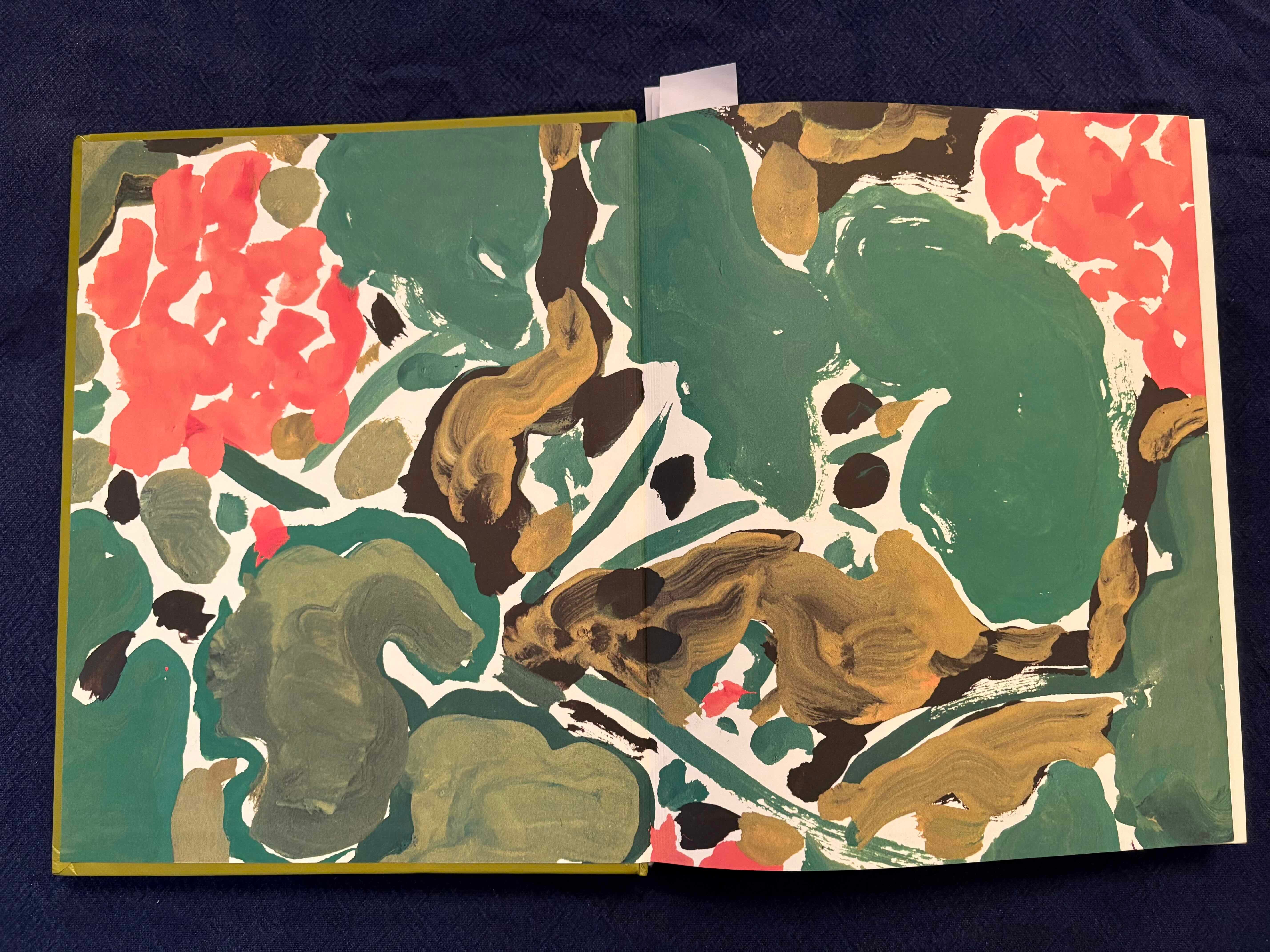
Visually, it really feels quite different than your earlier books.
AR: I was really proud of the visual language that I had created for the others. And then I started to see it be done again and again and again—and that made me want to do something totally different.
Is there anything that you wish was different about this book?
AR: Uh, yeah, but it’s like nitty gritty stuff. There’s a printing issue. Some of the colors didn’t get printed the way that they were supposed to. The cover texture that I wanted wasn’t available because of how it damages in transit. Just a lot of nitty gritty production stuff that I’m hoping and praying the average person won’t notice or care. But I notice, and if I think about it too much, it’ll kill me. So I have to pretend like it’s all good.
What’s something that you find boring when making a cookbook?
AR: Reading edits is so boring when you’re on, like, the third pass, but you have to read it again because you know that otherwise there’s going to be a mistake that eats its way out. And by the end of it, you’re like, am I boring? Does this suck? Is this even good anymore? It’s really tough to maintain the enthusiasm for yourself and for your own work, your own words, after reading it again and again and again.
Is there a cookbook cover that you’re obsessed with?
AR: Not one in particular, but I really love covers with no photos. And I have tried many times, but that is not an option for me, per my publisher. But one day I would like to publish a cookbook with no photo on the cover.
How are you feeling about events these days? You’re doing some big ones, right?
AR: I love doing events3. I think that it’s the best way to hear about a creative person’s creative process—their perspective as an author, as a cookbook maker, a cook. Even though these rooms are like hundreds and hundreds of people, they still feel quite intimate. And it’s a direct line of connection and communication with people that really want be there.
Internet connectivity is so passive. You’re scrolling, you’re like, I kind of know who this person is, I think I saw their picture, I read the headline. It’s a very passive, sort of wishy-washy thing. If you put yourself out there on the internet, it’s tough to know what’s being absorbed, who’s reading it…are they really reading it? Do they get it? Do they like me? Are they hate reading? How is this information actually being processed? How am I being interpreted? Are people paying attention?
But when you’re sitting in a room with people and you’re talking to them directly and people are asking you questions, it’s really intimate and personal. And it’s not being recorded; it’s not for other people. It’s for everyone in that room. And that feels really important to me. That feels like a really special thing that I don’t ever want to let go of.
In the introduction, you write that the book feels “mature” to you.
AR: I mean that in the way that a tree grows and it’s stronger, it’s taller. It’s more tree-like. When it’s a baby, you can kind of tell it’s a tree, but it’s a little flimsy. It sways, it can break easily. When it’s mature it feels really sure of itself and confident. I think it takes a lot of confidence to say, this recipe could have six more ingredients and it would be awesome, crazy flavorful. But it also takes like a lot of maturity and restraint to say it doesn’t need those other six ingredients. If you can sit with that and be sure of yourself, I feel like that shows real maturity and confidence.
Interview has been lightly edited. If you purchase a book through one of these links, I may receive a small commission.
Last Bites
I’ve started making a recurring donation to Chips, my local food pantry. Feeding America is another impactful organization.
The New York Times’s take on the reissue of Martha Stewart’s Entertaining. Don’t miss the comments, which capture Martha’s impact beautifully.
In the November issue of Real Simple (where I’m the food director), we excerpted three recipes from recent cookbooks:
’s Butternut Squash Pie, ’s Holiday Bundt, and Gesine Bullock-Prado’s Caramel Apple Pudding—all great ideas for Thanksgiving!José Andres announced his next cookbook.
When Dinner Feels Like Theater. Writer
on a meal at Alinea.NYT Bestsellers: The Pioneer Woman Cooks: The Essential Recipes (#1), Everything’s Good by Toni Chapman (#6) On the Children’s List: The Complete Cookbook for Young Chefs by America’s Test Kitchen Kids (#2)
Thanks for reading! If you enjoyed this post, please tap the ❤️ button, restack, or share with another cookbook fan.
These are part of my holiday cookie spread every year.
The easy and lovely Spicy Pork Soup with Pasta and Parmesan
For more on events, see last week’s interview with Amali Gordon-Buxbaum, the Events Director at Books Are Magic
Loved this interview Jenna! I really look forward to each of these conversations and so glad the Cookbookery Collective exists! Oh, and yay to more illustrations in cookbooks!
Very insightful interview. I’ve used Alison Roman’s cookbooks and made some great meals, but I’ve veered away from her recipes in the past few years. I look forward to welcoming her new book into my kitchen, it sounds lovely.