

Dianne Jacob Has Plenty of Cookbook Opinions
Luckily for us, the preeminent food writing teacher is happy to share.

Before we dive into today’s post, a couple of event updates. First, I’m attending the Cherry Bombe Jubilee in NYC on Saturday. If you’ll be there too, please say hi. Second, Cookbook Social is just over a week away on May 2 in Kingston, New York! We have a handful of tickets left for the Meet the Authors portion of the event from 3:30-5:30 PM. (The Author Conversations section is sold out!) All guests get free food and drink, including wine, a $10 gift card to put towards cookbook purchases, and an awesome swag bag. A huge thank you to our sponsors Straus Family Creamery, ButcherBox, Colavita, and Wisconsin Cheese! Get tickets here.
Now onto today’s regularly scheduled programming:
If you aren’t a cookbook author or food writer, you might not know Dianne Jacob’s name. But if you’re reading this (meaning you’re a cookbook person) I can almost guarantee you’ve read or cooked from a book that she somehow had a hand in creating.
A journalist by trade, Dianne has spent the past 30ish years helping food writers hone their craft. She coaches authors on their book proposals, edits cookbooks, teaches workshops around the world (including an upcoming one in Morocco), and writes a newsletter that features interviews with food writing professionals (like me!) and curated links about the biz.
Dianne is also the author of Will Write for Food, now in its fourth edition and a true classic. When I attended a cookbook talk with Yasmin Khan last fall, an audience member asked how she learned to be a food writer. Yasmin credited Will Write for Food. No less an authority than Anthony Bourdain blurbed the book.

Between her book, newsletter, workshops, and coaching, Dianne is a consummate teacher, reaching writers at all stages of their careers.
I wanted to talk to Dianne about cookbooks because she has such a long-term, insider perspective. She’s also one of those people (my favorite sort) who isn’t afraid to offer her unvarnished opinions. Thank you so much for being here Dianne, for sharing your cookbook wisdom, and for giving us all the tools to be stronger, more engaging writers!
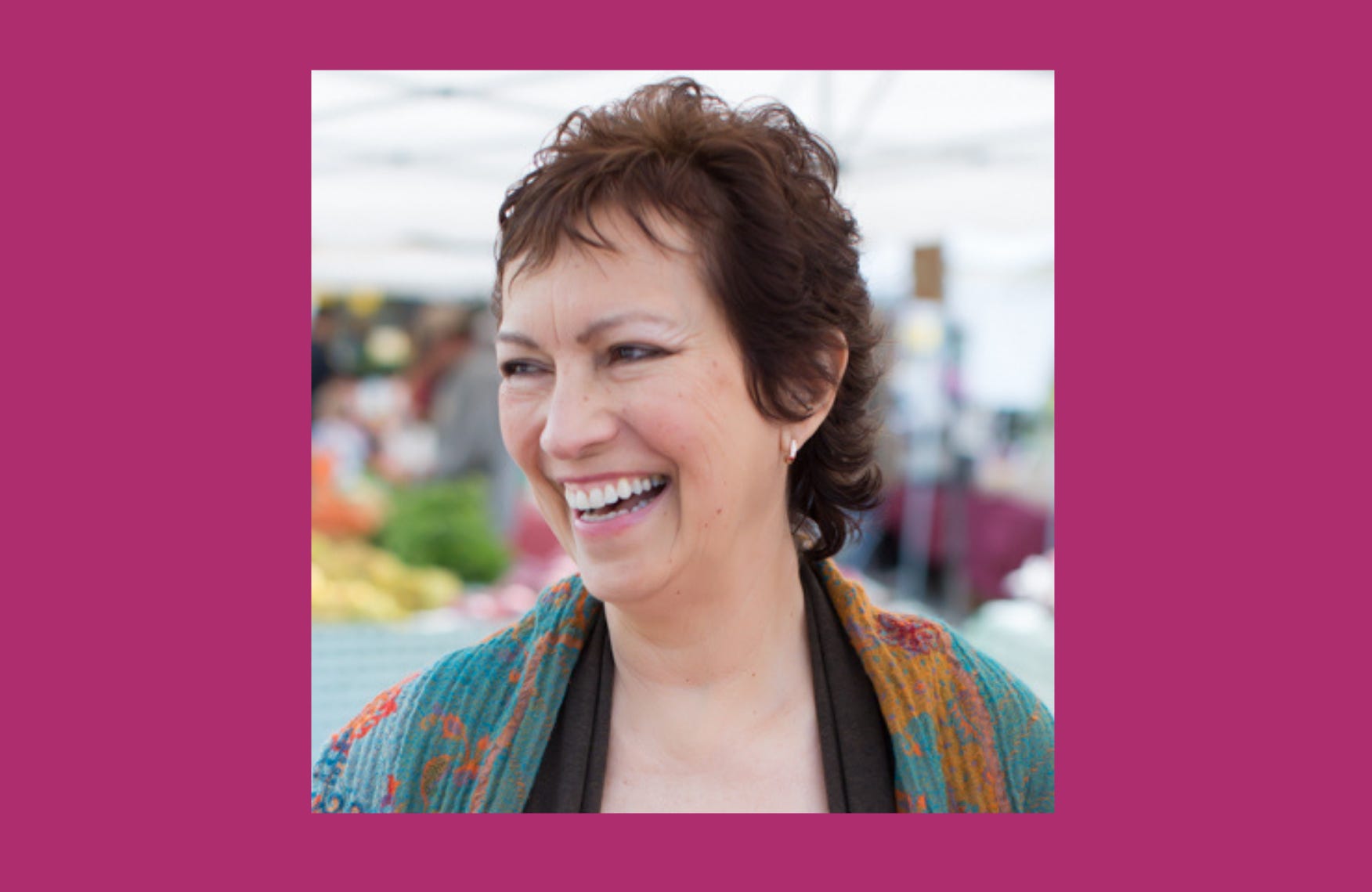
The Cookbookery Q&A with Dianne Jacob
About how many cookbooks do you own?
DJ: Maybe 200. I moved house a few years ago so I got rid of many.
How do you organize them?
DJ: They’re in my office now because there’s nowhere in my kitchen to put them. I have a big section for authors I’ve worked with. It’s satisfying to see shelves of books by those whom I coached on book proposals. Sometimes I edit cookbooks, both for publishers and individuals, so those books are there too. I also have a shelf for the cookbooks of friends and colleagues. There’s a section for Asian food, one for vegetarian food, and one for baking. And then the rest are kind of miscellaneous. Sometimes I have stopped cooking from them, but I can’t bear to give them away, because I like the book so much or I know the author.
What would you say to someone who questions why cookbooks still matter in our “digital age”?
DJ: Cookbooks are a different animal when compared to staring at a screen. Cookbooks have a cohesive theme. They provide a tangible way to immerse yourself in a country’s foods, a type of cuisine, or even a way to cook meals in 30 minutes. The big cookbooks are beautifully designed in ways that are impossible to emulate on the web. They provide eye candy in terms of design, color and photos. And those pillow tops and embossed texts are touchable in a way that screens are not.
What’s the first cookbook you remember cooking out of?
DJ: Betty Crocker’s Cookbook for Boys and Girls. I still make the sugar cookies. Recipes like Cream Dried Beef were foreign to our immigrant family, so the cookbook seemed exotic to me. There was an intriguing spread of a color photo with faces made from a banana, canned pear half and half an orange. My mother didn’t have to entice me to eat my fruit!
What kind of cookbook reader/user are you?
DJ: I tend to photocopy recipes I want to try, and then I decide whether to keep the book. If I get one great recipe worth repeating, I’m good. Sometimes I keep books for further reading. I’m not above flipping through a cookbook in bed.
When I’m done with a cookbook I sell it to a used bookstore. When I get a credit of a few hundred dollars, I give the trade slip to the head of a nonprofit preschool where I once served on the board. That way she can order whatever kind of books she wants for her kids and sometimes their parents.
Do you have any favorite cookbooks for reading?
DJ: Sometimes I like to dip into a cookbook that is of a time, such as Vegetarian Cooking for Everyone (Bookshop/Amazon) by my friend Deborah Madison. It reminds me of when cookbook authors were French-trained and thought you had to put butter, cream, and cheese in vegetables to make them taste good. (Not that it’s untrue, but there are other ways.) There was little mainstream knowledge then about pan-Asian vegan cooking.
What do you find boring in a cookbook?
DJ: Oh, I have lots of opinions on things I don’t like! Headnotes that say, “Serve with a salad and a loaf of crusty bread.” That’s tired. Passive voice — because cooking and baking are active. Recipes for chicken broth in the Basics chapter. I want to scream. Recipes that are nothing new. Writers who want me to make everything from scratch because they do so.
What is a cookbook that changed the way you cook?
DJ: Jerusalem (Bookshop/Amazon) by Yotam Ottolenghi and Sami Tamimi. It’s a little fussy about exact measurements and number of ingredients, but the recipes are terrific. I also love the way they present Jerusalem as a melting pot through photos, that it’s not just full of European Jews. My family is Iraqi-Jewish and the majority of people in Israel are now Mizrahi.

What’s a cookbook that totally transports you?
DJ: I had to look through my bookshelf to find an answer. The Contemporary Encyclopedia of Herbs & Spices: Seasonings for the Global Kitchen by Tony Hill. Yes, it’s by a white guy and it’s global cuisine, but that was 2004 and things changed somewhat after that. The recipes are excellent. I haven’t been able to get rid of it. I learned about Grains of Paradise by reading it, which I’d never seen used in a recipe by anyone except Amanda Hesser.
What do you wish there was more of in the cookbook space?
DJ: The cookbook space is still pretty white. I’ve read that it’s about 75 percent Caucasian, down from averages in the nineties in the past. So there’s more work to do with creating ambassadors for cuisines from other countries, or the American version of them, or allowing non-white writers to get out of lanes tied to their families’ country of origin.
How are you feeling about the cookbook business in general these days?
DJ: I really feel for people who want to write a cookbook but don’t have big social media numbers. I know it’s going to be a struggle. I’m tired of publicists writing to me about the newest influencer cookbook and how I should promote it. Mostly they don’t appeal to me, but of course, there are exceptions. I love how B. Dylan Hollis presents his take on food history.

How do you feel when you think about how influential your work has been?
DJ: Oh man. That’s a hard one. I don’t think about it, to be honest. Although I am proud of the endorsement from Anthony Bourdain that has graced the cover of Will Write for Food for many years. I feel fortunate to have been around in the early days for the heyday of food blogging, restaurant reviewing, and the rise of food writing. I tried to understand and chronicle it all.
Interview has been lightly edited. If you purchase a book through one of these links, I may receive a small commission.
Last Bites
An Interview with Hardie Grant’s Publishing Director - Frances Abrantes Baca talks with Jenny Wapner about cookbook design. Books mentioned include Lido (one of my favorite covers of the spring), Chesnok, and Soomaliya.
Behind the Book Deal - Agent Sally Ekus on how the new book The Lao Kitchen came to be
The Bestseller List - More explanation of the various lists, this time from fiction author and independent bookstore owner Emma Straub.
An Easy Recipe for Rhubarb Compote - From Will This Make You Happy by Tanya Bush. ‘Tis (almost) the season!
This week’s NY Times bestsellers: Nothing this week!
Thanks for reading! If you enjoyed this post, please tap the ❤️ button, restack, or share with another cookbook fan.